Showing posts with label bmw. Show all posts

Monday, June 3, 2013

New Car Review 2012 BMW Z4 2 8i


Front 3/4 view of white 2012 BMW Z4 parked with top down in country setting
The 2012 BMW Z4 2.8i.

Pundits have been predicting the end of our second golden age of performance for quite a while now...and reason tells you theyre probably right...that a combination of increasing mandated Corporate Average Fuel Economy (CAFE) standards and just plain old pain at the pump will someday result in liters and horsepower taking a back seat to efficiency and economy.

That being the case, the news that BMW, maker of the sweetest six-cylinders on this or any other planet, was shifting to four-cylinders in some variants of some of its models, was especially worrying.

Well, stop it. Now. The BMW Z4 2.8i, the four-cylinder that this year replaces the 3.0-liter 6, is soooo good.

Remember how much we loved the Z4 3.5i last year?  We love the 2.8i more.


Rear 3/4 view of white 2012 BMW Z4 roadster parked with top down in rural setting
The 2012 BMW Z4 2.8i.

First of all, its lost none of its looks. The Z4, long an ugly duckling, is now drop-dead gorgeous. If you can resist those curves, see a doctor.

Secondly, while the 2.8 packs 60 fewer horsepower than the 3.5, its a still-serious 240 horses, its 231 pounds lighter and that peak power comes up 800 rpms earlier. And that lighter weight means a lighter nose...the 2.8 is much more tossable than the 3.5. Plus, BMW engineers have managed to make the four feel almost as silky as their legendary sixes.

Third, theres some serious fuel economy involved here. The EPA estimate for the Z4 2.8i is 22 city/34 highway, and what we saw in our week at the wheel suggests thats a realistic number.


The 2012 BMW Z4 2.8i interior.

And the interior...my Lord, the interior. The Z4 is one of the few cars on the market today where the inside looks as good as the outside and vice-versa. Everythings right where it should be and it all looks and feels very special...never, ever, giving you the feeling youre in an ordinary car. And youre not.

$49.525 with delivery and handling gets you a fully equipped car that will impress the neighbors, attract admiring looks from strangers, entertain you in motion and save you money at the gas station.

The 2.8 secures its place on TireKickers Top Ten Cars list for all those reasons. I drive 104 cars a year. Theres something new every week. I want this one back.


If you want to drive the newest models, consider Vehicle leasing from Comparecontracthire.com in order to choose from a large selection of makes and models.

Sunday, May 12, 2013

BMW Celebrates 40 Years of Electric Mobility

[BMW-325iX-1%255B2%255D.jpg]

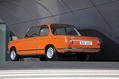
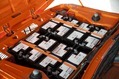
When the first production version of the BMW i3 rolls off the assembly line in Leipzig in late 2013, it will mark the provisional culmination of 40 years of development work at BMW. It all began at the 1972 Olympic Games in Munich, where the BMW starting line-up included two electrically powered test vehicles. The converted BMW 1602 models served as a means of transport for the members of the organizing committee, and were also deployed as support and camera cars in various long-distance events. However, there could be no questioning that lead batteries weighing 350 kilograms and with a range of around 60 kilometres (37 miles) were hardly ideal for a production car. BMW therefore launched a series of research and development projects with the aim of bringing an improved and, above all, more efficient technology for electric drive systems onto the road.
Read More


BMW-325iX-1BMW-325iX-2BMW-325iX-3BMW-325iX-4BMW-325iX-5BMW-325iX-6BMW-325iX-7BMW-ActiveE-3BMW-ActiveE-1 BMW-ActiveE-2BMW-ActiveE-4BMW-ActiveE-5BMW-E-Range-1BMW-E-Range-2BMW-E1-6BMW-E1-3BMW-E1-1BMW-E1-4BMW-E1-5BMW-E1-7BMW-E1-8MINI-E-1MINI-E-2MINI-E-3MINI-E-4MINI-E-5BMW-1602-Electric-1BMW-1602-Electric-2BMW-1602-Electric-3BMW-1602-Electric-4BMW-1602-Electric-5BMW-1602-Electric-6BMW-325i-Electric-4BMW-325i-Electric-5BMW-1602-Electric-7BMW-1602-Electric-9BMW-325i-Electric-10BMW-325i-Electric-6BMW-1602-Electric-8BMW-325i-Electric-1BMW-325i-Electric-2BMW-325i-Electric-7BMW-325i-Electric-8BMW-325i-Electric-3


Press Release

40 years of electric mobility at the BMW Group.
From the BMW 1602 to the BMW i3.


When the first production version of the BMW i3 rolls off the assembly line in Leipzig in late 2013, it will mark the provisional culmination of 40 years of development work at BMW. It all began at the 1972 Olympic Games in Munich, where the BMW starting line-up included two electrically powered test vehicles. The converted BMW 1602 models served as a means of transport for the members of the organising committee, and were also deployed as support and camera cars in various long-distance events. However, there could be no questioning that lead batteries weighing 350 kilograms and with a range of around 60 kilometres (37 miles) were hardly ideal for a production car. BMW therefore launched a series of research and development projects with the aim of bringing an improved and, above all, more efficient technology for electric drive systems onto the road.

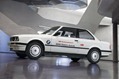
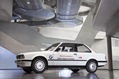
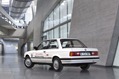
From late 1975, an experimental vehicle built on the platform of the BMW LS and fitted with new batteries and a new electric motor started to deliver the first findings. Then, in the 1980s, a research project was launched entitled “Electric car with high-energy battery”, which provided valuable experience in the use of sodium-sulphur energy storage devices. BMW furthermore constructed a special test rig for electric drives with a built-in output calculator. Besides the batteries, testing here focused primarily on the drive system and drive control. To trial the concept, eight vehicles based on the BMW 325iX were converted and subsequently proved their merit in inner-city use, for example as delivery vehicles for the German postal service.

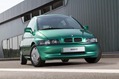
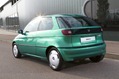
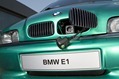
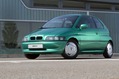
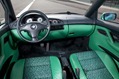
The promising results of the research project prompted BMW to start work on designing a pure electric vehicle. Whereas previous experimental vehicles had been merely converted versions of standard production models, providing little scope for tailoring them to the specific requirements of an electric drive, this was all about to change. BMW’s work was underpinned by the realisation that the limited range of electric cars made them of interest for city use first and foremost. The first purpose-built solution was unveiled at the 1991 Frankfurt Motor Show: the BMW E1, an electrically propelled “citymobile” for use in cities and conurbations. Even back then, this prototype stood out for its low weight and high safety levels thanks to its consistent lightweight design and high-strength bodyshell.

Its performance capabilities also made impressive reading: with an output of 32 kW, a peak torque of 150 Nm (111 lb-ft) and a range of around 160 kilometres (100 miles) its attractive key figures made it a viable possibility for day-to-day use, too.

In addition to the five E1 prototype vehicles, the project also featured 25 converted production models based on the BMW 3 Series. Between 1992 and 1996, eight BMW 325 models were in service on the island of RĂ¼gen off Germany’s Baltic coast to test out various motors, transmissions and batteries under everyday conditions. The field trial produced large quantities of detailed data, which provided valuable insights for the further development of electric mobility. The project came to a conclusion with the BMW electric in 1997.

In 2008, a fleet of around 600 all-electric MINI E models designed for private, everyday use took to the roads. The findings gleaned by the BMW Group from its pilot project were channelled straight into the development process for a production car. The potential of lithium-ion batteries in particular was taken to new heights in the MINI E. Just one year later, the world premiere of the BMW Concept ActiveE in early 2010 saw the BMW Group push even further ahead with its research and development activities. Practical trials of over 1,000 units of this model got under way in 2011. As with the MINI E, the overriding objective was the creation of a Megacity Vehicle (MCV), which is now on the verge of being launched as the BMW i3. The electric drive system in the BMW i3 Concept is a perfect example of what ongoing, systematic development can achieve: it takes up around 40 per cent less space than the drive in the MINI E while generating the same output.

Saturday, May 11, 2013

How to Tune a BMW Series 5


Performance Air Intake
1. Unhook the air filter casing from the engine, located on the driver side of the vehicle. A performance intake upgrade will free up horsepower and improve fuel efficiency, and the new air filter can be removed and cleaned periodically for reuse.
2. Lift the old filter out of the casing slowly, making sure dirt and debris does not spill onto the engine bay.
3. Remove any dirt or debris that fell into the intake system carefully.
4. Install the new, aftermarket air filter just as the old one was positioned. Fasten the hardware back into place as necessary.
5. Leave air filter casing off of vehicle to expose filter to more air, ultimately leading to maximum power gain. Regularly monitor the air filter and clean annually.
Oil and Oil Filter
6. Jack each front wheel off of the ground to gain access to the oil pan and filter. Once each side has been lifted, place a jack stand behind the wheel and lower the vehicle down until it rests firmly on the stand. Change engine oil once every 3,000 miles to optimize engine performance.
7. Put the oil recyling container under the oil pan and remove the plug. Let all of the oil drain from the pan and replace the plug when finished.
8. Turn the oil filter counter-clockwise with an adjustable wrench to remove.
9. Add motor oil to the new filter until it is 2/3 full. Use your hand and turn the filter clockwise into position until completely tight.
10. Pour new motor oil into the engines oil compartment with the provided funnel. Check the dipstick to measure the levels of the oil, simply adding more if needed.
Distributor Cap and Rotor
11. Remove the black cap that protects the distributor of the BMW 5-Series. Both of these are located at the front of the engine, and not hard to locate. Unbolt the distributor from its location and set aside.
12. Unscrew the bolts holding the rotor in place. Pull off this shield and inspect the O-ring inside. Replace if necessary.
13. Tug on the spark plug wires from the boot with the provided wire pullers. Connect each wire lead to the corresponding position on the new distributor. Position new distributor into place and put dust shield back on top.
14. Bolt new rotor into place using the old hardware. Fasten the distributor cap back into place using the provided hardware.
15. Jack each side of the vehicle off of the jack stands and lower the car.

How to Troubleshoot a BMW Cooling System


1. Replace the coolant. By replacing the coolant at regular intervals as suggested by your BMW owners manual, you can resolve many potential issues with the cooling system. The manual will give you the exact amounts and procedures for your particular model BMW.
2. Examine the water pump drive belt. The driving belt controls the operation of the water pump. The belt may need a tension adjustment or a replacement if it has stopped working. Its a common cause of BMW cooling system issues.
3. Check the hoses of the cooling system. Look for any holes, cracks or leaks. If you find any of these issues, order replacement hoses (hoses should be changed every two years as a part of your BMW maintenance schedule). Check the other parts of the cooling system for leaks and clogs as well, including the radiator, heater valve and control valves.
4. Get a reading from the thermostat of your BMW cooling system. If the temperature gauge drops suddenly from high to low, then this could indicate that you have a sticking thermostat or a problem with your fan clutch.
5. Review the speed and efficiency of the fan of your BMW cooling system. Use the auxiliary fan switch on your BMW to check the functionality of the fan to determine if this could possibly be the issue.

Friday, May 10, 2013

How to Replace the Lens on a BMW 325


Removing and Replacing
1. Pull the lever located near the foot pedals on the drivers side of your BMW 325 to unlatch your hood. Face the hood of your vehicle and pull the hood-release lever located in the grille of your car to fully open the hood.
2. Shine your flashlight to the lower right or left corner inside your hood to find the interior part of your corner turn lens. Locate an oval-shaped hole behind the corner turn lens.
3. Push down and outward on the plastic clip within the oval hole with your flathead screwdriver to release the corner turn lens. Continue to keep your screwdriver in place within the oval hole while pulling the corner turn lens out with your free hand. Set the corner turn lens aside for re-installation. Removing your corner turn lens makes the headlight lens accessible for removal.
4. Lift up on the three tabs located on the top of the rubber trim that surrounds your headlight lens with your fingers. Remove the trim to loosen your headlight lens. Set the trim aside for re-installation.
5. Move your fingers around the top of your headlight lens and pull up on the three tabs that secure the headlight lens in place. Repeat this procedure on the bottom of the lens. Pull one tab out from each side of the lens. Pull the lens towards you once all tabs are released.
6. Align your new headlight lens in place. Push it with slight force to snap it into place. Push the rubber trim back into place snapping the connected tabs down. Push the corner turn lens into its original position until it clips back in.
7. Repeat Steps 1 to 7 to replace the headlight on the opposite side of your BMW 325.

How to Make Your Own BMW


1. Point your web browser to www.bmwusa.com, and click the link at the upper right, and just below the Home button that invites you to Build Your Own.
2. On the Build Your Own homepage, select the model that you would like to build by clicking the hyperlinked model number. (Example, if you would like to build an X5 535d, go to the column marked X5 for the model, and select the link for the appropriate engine--in this case, the 3.5-liter diesel.
3. Once you have selected the appropriate model and engine, you will have arrived at the page which allows you to build your BMW. You are presented with a photo of the car, and the option to view the front or side, or the entire car in 360 degrees. You will also have the option to view the interior, toggling back and forth between side view and dash view. Across the top of the picture of the selected BMW there are multiple tabs that allow you to toggle back and forth between Exterior Color, Interior, Options, Packages, Accessories, and a Summary of the BMW that you have designed.
4. As you update your preferences in the tabs, to the far right you are able to see a constantly updated summary of the options that you have chosen as you add and subtract them, and the subsequent impact that they may have on the price of the vehicle. Once you have completed configuring your BMW, you are able to follow the links at the top of this column to save (you must create an account) or print your BMW as made by you.
5. Finally, once you have successfully configured your BMW, click the summary tab. The screen that loads will not only offer you a summary of your packages and options (as well as their associated costs), but will offer you a link at the bottom to explore financing and leasing options available through BMW if you are interested in taking the next step.

How to Change the Cabin Air Filter in a 5 Series BMW


1. Shut the engine off and open the hood.
2. Locate the cabin air filter compartment in the rear (near the windshield) part of the passenger side engine bay.
3. Remove the 13mm bolt from the assembly with a socket wrench. Unplug the pressure sensor connection from the assembly.
4. Flip up the two latches that attach the top part of the assembly. Lift the cover and the cabin air filter from the vehicle (the filter is attached to the cover).
5. Remove the old filter from the compartment cover. Insert the new filter, lining up the filter and cover notches.
6. Inspect the bottom part of the compartment for debris (leaves, twigs, etc.) Remove them from the compartment and wipe it with a dry towel.
7. Insert the top part of the compartment with the new filter. Snap up the two latches, reconnect the pressure sensor and tighten the 13mm bolt.
8. Repeat the process for the driver side cabin air filter.

How to Change the Brake Fluid in a BMW Z4


1. Loosen the lug nuts for the wheels. Lift the car with the floor jack and lower it securely onto jack stands. Remove the wheels and set them aside.
2. Open the hood and remove the lid to the brake fluid reservoir. Use the syringe or similar tool to remove the brake fluid from the reservoir and transfer it to a waste container. Fill the reservoir with fresh brake fluid, filling it past the full mark.
3. Locate the bleeder valve on the right rear caliper, located on the upper, outside of the caliper. Remove the rubber cap so that you can access the nut that loosens the valve. Attach the tube for the bleeder kit to the bleed valve on one end and into a clear plastic container with a small amount of brake fluid in it. Loosen the bleeder valve a quarter-turn with a line wrench.
4. Depress the brake pedal from behind the wheel until you see that the new brake fluid coming out of the caliper and into the container. This may take 15 pumps or more. Check the fluid that is coming out of the caliper periodically and ensure that the brake fluid reservoir is still topped up so that air does not enter the brake system.
5. Tighten the bleeder valve, remove the tube and then reinstall the rubber cap on the bleeder valve. Repeat this process for the left rear wheel, the right front wheel and then the left front wheel until all four corners of the car have been bled. Make sure the reservoir stays full of brake fluid during the procedure so that no air is allowed to enter the brake system. Replace the cap for the brake fluid reservoir.
6. Reinstall the wheels. Lower the car off of the jack stands and tighten the lug nuts for the wheels in a criss-cross pattern.

How to Tow a BMW


1. Open the BMW trunk, and use a screwdriver to unfasten the latch that secures the toolbox. Take the metal hooks off and remove the screwdriver inside the toolbox.
2. Find the tow hook cover, which should be attached to the back wall of the bumper. Use the screwdriver to remove it.
3. Find the front tow hook cover. You can find this next to the fog lights to the right hand side of the vehicle. Remove it with the screwdriver.
4. Attach the tow hook covers to the front and back of the car. You can do this by using the screwdriver to secure them.
5. Remove the tow trucks winch -- you can do this by hand. Fix it to the tow hook at the back of the vehicle. Make sure that the winch is secure.
6. Put the car into neutral and disengage the parking brake.
7. Check that the winch is secure again. Carefully pull the vehicle on to the flatbed. Hold the winch securely. Put the vehicle in gear. Put the parking brake back on.

2011 BMW 5 Series Police


BMW has released new 2011 BMW 5 Police Series. Both of them will equip the UK police forces from 52 stations. The 2011 BMW 5 Series police car force will include the 530d Saloon and Touring. Apart from the 2011 BMW 5 Series police car, BMW will also supply the British forces with the following models: 330d Saloon and Touring, X1, X3 xDrive20d, X5 xDrive30d and xDrive40d.

Aside from the latest 5 Series models, which are an all-new addition to Police fleets, BMW also announced a specially modified 330d Saloon Interceptor as its High Performance Pursuit Vehicle.

BMW is the only supplier of the production of packages installed special equipment for emergency warning equipment that can be important the support of BMW Service Centres in the UK with a three year warranty from BMW. Generally, vehicles are built by manufacturers must be removed for the installation of this equipment back. The answer (reply EMERGENCY SERVICE officially licensed system package) package provides the vehicle with a team of high-level role of emergency service pre-installed that allows for near ” Plug and Play Car “, which greatly reduces the start time and the need for third to start the cut in the vehicle wiring harness.


2011 BMW 5 Series Police2011 BMW 5 Series Police2011 BMW 5 Series Police


Press Release

BMW has been approved as a key supplier for all 52 Police forces around the country by the National Policing Improvement Agency. The announcement means some of BMW’s class-leading products will become standard issue to the UK’s Policemen and women as part of the four-year deal.

BMW 5 Series UK Police Car 2011 - Front Side View 2011 BMW R1200 RT UK Police - Front Angle View

The news will see cars such as the BMW 330d Saloon and Touring, 530d Saloon and Touring, all variants of X1, X3 xDrive20d, X5 xDrive30d and xDrive40d, and the R1200 RF-P Police bike all take a high profile role in the fight against crime. Some of the vehicles will also be unmarked and perform less visible policing roles.

While the latest 5 Series will be an all-new addition to most Police fleets it is the BMW 330d Saloon Interceptor model that is sure to cause the most interest. Billed as a High Performance Pursuit Vehicle, the modified BMW is capable of a rapid response role while also fulfilling the environmental and running cost demands all forces have to think of too. Full technical details of the car can not be specified for security reasons.

Tim Abbott, Managing Director of BMW UK, said: “This is excellent news for BMW and shows the breadth of appeal of the products we sell. We have a very strong commitment to the ‘Authorities market’ throughout the world and have a very close relationship with the UK’s Police forces. Orders for BMW Police vehicles started as long ago as the mid 1970s in the UK. This latest news reaffirms our commitment to 21st Century policing.”

Of the 52 UK Police forces, virtually all operate BMW Authorities products of one form or another, while two thirds operate high-levels and nearly half of those operate with a near BMW High Performance only fleet. When the above models are added to the rest of the BMW Authorities range of specialist vehicles, such as medical and fire tenders, considerable savings through economies of scale can be made in training, tooling and parts.

BMW is unique in offering production line installed special equipment packages for Emergency Warning equipment which importantly can
be supported by BMW Service Centres throughout the UK with a three-year BMW warranty. Ordinarily vehicles are built by manufacturers only to be disassembled for the retrospective installation of such equipment. The RESPoNSe (Responder EMERGENCY SERVICE Package official eNabled Systeme) package provides vehicles with a high-level of emergency service role-equipment pre installed allowing for a near ‘Plug & Play’ car, thus significantly reducing the time into service and the need for third-parties to start cutting into the vehicle’s wiring harness.

BMW operates a dedicated department with a team of specialists based at the BMW Group International – Special Sales Competence Centre. This specialist department is responsible for all BMW Authorities specification vehicles sold and operating as Emergency Service vehicles including cars, motorcycles, MINI and ballistically protected BMW Security and High Security cars.