Showing posts with label electric. Show all posts

Sunday, May 12, 2013

BMW Celebrates 40 Years of Electric Mobility

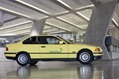
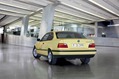
[BMW-325iX-1%255B2%255D.jpg]

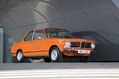
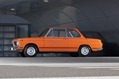
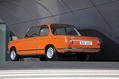
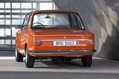
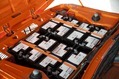
When the first production version of the BMW i3 rolls off the assembly line in Leipzig in late 2013, it will mark the provisional culmination of 40 years of development work at BMW. It all began at the 1972 Olympic Games in Munich, where the BMW starting line-up included two electrically powered test vehicles. The converted BMW 1602 models served as a means of transport for the members of the organizing committee, and were also deployed as support and camera cars in various long-distance events. However, there could be no questioning that lead batteries weighing 350 kilograms and with a range of around 60 kilometres (37 miles) were hardly ideal for a production car. BMW therefore launched a series of research and development projects with the aim of bringing an improved and, above all, more efficient technology for electric drive systems onto the road.

Read More


BMW-325iX-1BMW-325iX-2BMW-325iX-3BMW-325iX-4BMW-325iX-5BMW-325iX-6BMW-325iX-7BMW-ActiveE-3BMW-ActiveE-1 BMW-ActiveE-2BMW-ActiveE-4BMW-ActiveE-5BMW-E-Range-1BMW-E-Range-2BMW-E1-6BMW-E1-3BMW-E1-1BMW-E1-4BMW-E1-5BMW-E1-7BMW-E1-8MINI-E-1MINI-E-2MINI-E-3MINI-E-4MINI-E-5BMW-1602-Electric-1BMW-1602-Electric-2BMW-1602-Electric-3BMW-1602-Electric-4BMW-1602-Electric-5BMW-1602-Electric-6BMW-325i-Electric-4BMW-325i-Electric-5BMW-1602-Electric-7BMW-1602-Electric-9BMW-325i-Electric-10BMW-325i-Electric-6BMW-1602-Electric-8BMW-325i-Electric-1BMW-325i-Electric-2BMW-325i-Electric-7BMW-325i-Electric-8BMW-325i-Electric-3


Press Release

40 years of electric mobility at the BMW Group.
From the BMW 1602 to the BMW i3.


When the first production version of the BMW i3 rolls off the assembly line in Leipzig in late 2013, it will mark the provisional culmination of 40 years of development work at BMW. It all began at the 1972 Olympic Games in Munich, where the BMW starting line-up included two electrically powered test vehicles. The converted BMW 1602 models served as a means of transport for the members of the organising committee, and were also deployed as support and camera cars in various long-distance events. However, there could be no questioning that lead batteries weighing 350 kilograms and with a range of around 60 kilometres (37 miles) were hardly ideal for a production car. BMW therefore launched a series of research and development projects with the aim of bringing an improved and, above all, more efficient technology for electric drive systems onto the road.



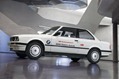
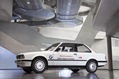
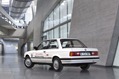
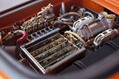
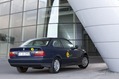
From late 1975, an experimental vehicle built on the platform of the BMW LS and fitted with new batteries and a new electric motor started to deliver the first findings. Then, in the 1980s, a research project was launched entitled “Electric car with high-energy battery”, which provided valuable experience in the use of sodium-sulphur energy storage devices. BMW furthermore constructed a special test rig for electric drives with a built-in output calculator. Besides the batteries, testing here focused primarily on the drive system and drive control. To trial the concept, eight vehicles based on the BMW 325iX were converted and subsequently proved their merit in inner-city use, for example as delivery vehicles for the German postal service.

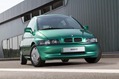
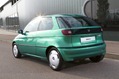
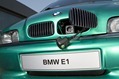
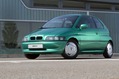
The promising results of the research project prompted BMW to start work on designing a pure electric vehicle. Whereas previous experimental vehicles had been merely converted versions of standard production models, providing little scope for tailoring them to the specific requirements of an electric drive, this was all about to change. BMW’s work was underpinned by the realisation that the limited range of electric cars made them of interest for city use first and foremost. The first purpose-built solution was unveiled at the 1991 Frankfurt Motor Show: the BMW E1, an electrically propelled “citymobile” for use in cities and conurbations. Even back then, this prototype stood out for its low weight and high safety levels thanks to its consistent lightweight design and high-strength bodyshell.

Its performance capabilities also made impressive reading: with an output of 32 kW, a peak torque of 150 Nm (111 lb-ft) and a range of around 160 kilometres (100 miles) its attractive key figures made it a viable possibility for day-to-day use, too.

In addition to the five E1 prototype vehicles, the project also featured 25 converted production models based on the BMW 3 Series. Between 1992 and 1996, eight BMW 325 models were in service on the island of RĂ¼gen off Germany’s Baltic coast to test out various motors, transmissions and batteries under everyday conditions. The field trial produced large quantities of detailed data, which provided valuable insights for the further development of electric mobility. The project came to a conclusion with the BMW electric in 1997.

In 2008, a fleet of around 600 all-electric MINI E models designed for private, everyday use took to the roads. The findings gleaned by the BMW Group from its pilot project were channelled straight into the development process for a production car. The potential of lithium-ion batteries in particular was taken to new heights in the MINI E. Just one year later, the world premiere of the BMW Concept ActiveE in early 2010 saw the BMW Group push even further ahead with its research and development activities. Practical trials of over 1,000 units of this model got under way in 2011. As with the MINI E, the overriding objective was the creation of a Megacity Vehicle (MCV), which is now on the verge of being launched as the BMW i3. The electric drive system in the BMW i3 Concept is a perfect example of what ongoing, systematic development can achieve: it takes up around 40 per cent less space than the drive in the MINI E while generating the same output.

Friday, May 10, 2013

Electric Monster Truck【Video】

https://blogger.googleusercontent.com/img/b/R29vZ2xl/AVvXsEjqjzg-vJEo8JmYW2VCLA3oPCLLSPkHPMliuEmNAj3iefGlXEJTkB0WvK_LdUuxmyHv6byPOdhwhCXDvpVKMH1BUDNwtp16mXT9uiqhRuQ8rujueFSP4cgh0GrYd7tliMq6gtaaXr1c0pHr/s1600/bigfoot-ev.png

Thirty Odyssey batteries are used to feed an electric motor rated at 260-kilowatts (the equivalent of 350 horsepower) and an impressive 850 pound-feet of torque. Public preconceptions of electric cars as wimpy fiberglass golf carts are starting to wane, ever so slowly.

Like the monster trucks you can see at just about any stadium around the country, this Bigfoot has tires that make crushing cars easy and four-wheel steering for better maneuverability. In all, the trucks 36 batteries add an extra 1,375 pounds, and while the system includes on-board battery chargers, there is no word on how long such a job would take.

Besides having an electric powertrain, the #20 BIGFOOT is equipped with heavy-duty ZF planetary axles, a ProFab transfer case and 25-inch steel wheels with 66-inch tall Firestone tires. The model has also switched back to a Ford body after briefly using a Chevrolet body in 2010.

Do we need to remind you that, because it’s electric, the truck has all that torque on tap at zero rpm?


Press Release

ODYSSEY® Battery BIGFOOT® No. 20 Monster Truck, Worlds First Electric Monster Truck

READING, Pa. (Nov. 27, 2012) – ODYSSEY® battery by EnerSys, a primary sponsor of the 2012 BIGFOOT 4x4, Inc. monster truck team, provided ODYSSEY® batteries to power the worlds first electric monster truck: the ODYSSEY® Battery BIGFOOT® No. 20 Monster Truck.

Each of the 36 ODYSSEY® PC1200 batteries that power the ODYSSEY® Battery BIGFOOT® No. 20 Monster Truck weighs 38.2 pounds, but provides 1,200 five-second pulse hot cranking amps (PHCA), as well as 540 cold-cranking amps (CCA), 78 minutes of reserve capacity and 400 cycles of deep cycle capability at 80 percent depth of discharge (DOD).

The ODYSSEY® Battery BIGFOOT® No. 20 Monster Truck carries a custom-designed 2012 fiberglass body and includes a battery-powered electric motor, which was designed and built by Dennis Berube of Phoenix to wield 350 horsepower and 850 foot-pounds of torque. Three banks of 10 ODYSSEY® batteries power the engine for a total of 360 Volts. The additional six ODYSSEY® batteries power the brakes and steering systems. Other custom features include onboard battery chargers and variable-speed programmable speed controller.

"Weve been sponsoring BIGFOOT® monster trucks for almost 10 years," said Dave McMullen, director of commercial marketing for specialty and UPS markets at EnerSys®. "The punishing conditions of a monster truck race are a perfect demonstration of ODYSSEY® batteries at their rugged best. We are particularly excited to be part of the worlds first battery-powered monster truck, and are proud of BIGFOOT 4X4, Inc.s confidence in our batteries that they play such a

"ODYSSEY® batteries have helped our team to win more than 20 monster truck championships," said Jim Kramer, vice president of research, technology and driver development of BIGFOOT 4X4, Inc. "Were happy to have ODYSSEY® batteries as a partner in the development of the ODYSSEY® Battery BIGFOOT® No. 20 Monster Truck. Developing a custom electric monster truck is part of our efforts to keep up with ever-changing technology. For now, the ODYSSEY® Battery BIGFOOT® No. 20 Monster Truck will be used in static displays and parades, but as we become more experienced with the electric power unit, battery maintenance, controller adjustments, drive lines and weather, our fans may just see it perform car crushes or even compete in monster truck shows."

About EnerSys®
EnerSys®, the world leader in stored energy solutions for industrial applications, manufactures, distributes and services reserve power, motive power and starting, lighting and ignition (SLI) batteries, chargers, power equipment, and battery accessories to customers worldwide. SLI batteries are used for trucks and buses, passenger cars, boats, personal watercraft, ATVs, motorcycles and garden tractors. The company also provides aftermarket and customer support services to its customers from more than 100 countries through its sales and manufacturing locations around the world. For more information about EnerSys® and its ODYSSEY® batteries, visit www.enersys.com or www.ODYSSEYbattery.com.

About BIGFOOT 4x4, Inc.
Since its inception in 1975, BIGFOOT, The Original Monster Truck®, has gone on to achieve worldwide notoriety, and spawned an entire family of BIGFOOT monster trucks that have pioneered the growth of the monster truck industry. Created by St. Louis-area contractor Bob Chandler and his wife Marilyn in 1975 as a promotional tool for their Midwest Four Wheel Drive business, the BIGFOOT fleet has captured 29 National Championships, set numerous world records for monster trucks, and travelled to more than 26 countries. In 2009, BIGFOOT was named one of the "Top 5 Marketing Vehicles of All Time." Since 1975, more than 20 BIGFOOT vehicles have been constructed, and today the team campaigns seven (soon to be nine) BIGFOOT monster trucks full-time in North America, in addition to one based full-time in England. The team achieves in excess of 4 million live impressions each year and will have over 800 appearance days in 2012 with more expected in 2013. Over half-a-million BIGFOOT toys are sold every year. Visit the team online at www.bigfoot4x4.com